
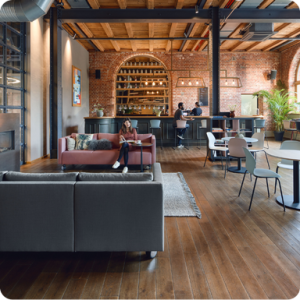


Different Types of Office Layout
When it comes to designing an office, the layout plays a crucial role in shaping the work environment. It influences everything from employee productivity to workplace culture, making it a key consideration for any business. Whether you are setting up a new space or redesigning an existing one, understanding the various types of office layouts available can help you make an informed decision that aligns with your business goals and employee needs.
What Are The Different Types of Office Layout?
At Innov8, we specialise in creating tailored office spaces that boost efficiency and enhance employee well-being. This guide will explore the different types of office layouts, providing detailed insights into their pros and cons to help you choose the best option for your needs. By leveraging our expertise in office design, we aim to transform your workspace into a dynamic and productive environment that supports your business’s success.
Types of office layouts
Choosing the right office layout is essential for creating a productive and engaging work environment. The design of your office space can greatly influence employee productivity, satisfaction, and overall workplace culture. Here, we delve into various types of office layouts, each specifically designed to cater to different business needs and employee preferences. Understanding these options will help you make an informed decision that enhances efficiency and fosters a positive work atmosphere.
Cellular Office Style
The cellular office layout is a classic design that partitions the workspace into individual offices or rooms. Each enclosed area is separated by walls and doors, offering a high degree of privacy. This layout is particularly well-suited for roles that demand confidentiality and focused work. The separation of space allows employees to concentrate without interruptions, while still providing the flexibility to adapt to various needs within the office.
Solutions: To maximise the benefits of a cellular office layout, consider incorporating effective soundproofing materials and selecting high-quality office furniture. A well-designed office layout can significantly contribute to productivity and comfort. Explore our office furniture solutions and interior design services to enhance your cellular office setup.

Best For: Legal and financial services, HR departments, and businesses requiring a high level of confidentiality.
Pros: Enhanced privacy and security, reduced noise levels, and personal control over the work environment.
Cons: May limit opportunities for spontaneous collaboration and can lead to higher costs due to the construction of partitions and maintenance.
Mixed Office Layout
A mixed office layout strikes a balance between private and collaborative spaces. This design includes a combination of single offices and open team areas. It is ideal for businesses that require both focused workspaces and areas that foster team interaction. The flexibility inherent in this layout allows organisations to cater to diverse working styles and job functions.
Solutions: Implementing versatile office furniture and adaptable workspace designs can enhance the functionality of a mixed layout. Expert consultancy can help optimise space and ensure that each area is effectively utilised.

Best For: Medium to large enterprises with varied work needs and employee preferences.
Pros: Flexibility to accommodate different work styles, a mix of privacy and collaboration opportunities, and adaptability to evolving business needs.
Cons: The complexity of design might lead to underutilisation of some areas if not properly managed.
Open Plan Layout (Task Focused)
Open Plan Office Layouts bring a mix of advantages and disadvantages. With Open Plan Layouts, it is important to understand they type of work being carried out in the area, and design around the type of workspaces people need.
In a Task Focused open plan layout, the office is designed with large, unobstructed spaces that are organised to support specific tasks, or even group teams together to enable better communication. This layout fosters efficiency by grouping similar tasks together, allowing for streamlined workflows and easy movement between task areas. It is ideal for environments where clear, task-oriented processes are critical.
This type of layout can sometimes be called a Bullpen Office Layout.
Solutions: Implementing versatile office furniture and adaptable workspace designs can enhance the functionality of a mixed layout. Expert consultancy can help optimise space and ensure that each area is effectively utilised.

Best For: Businesses that need to optimise workflow efficiency, streamline operations, or maximise space per person.
Pros: Facilitates clear workflow, maximises space utilisation, and enhances team communication within task-specific areas.
Cons: The lack of privacy can lead to distractions, and noise levels may be higher due to the open nature of the design.
Open Plan Layout (Collaborative)
The open plan (collaborative) layout is designed to encourage interaction and teamwork by creating expansive, open areas that facilitate easy communication and collaboration. This design often includes both shared workspaces and dedicated team zones, fostering a culture of innovation and collective problem-solving.
Solutions: To address privacy and noise issues, consider integrating acoustic panels and ergonomic furniture solutions. Creating well-planned collaborative spaces can significantly enhance the effectiveness of your office layout.

Best For: Creative industries, tech firms, and any business that prioritises collaboration and team engagement.
Pros: Promotes effective communication and teamwork, encourages spontaneous interaction, and can increase overall employee engagement.
Cons: The lack of privacy can lead to distractions, and noise levels may be higher due to the open nature of the design.
Partially Partitioned Layouts
Partial partitions use low-level walls or storage units to create defined spaces within an open office. This approach maintains an open aesthetic while providing a degree of separation for privacy and focus. It strikes a balance between the benefits of an open plan and the need for defined work areas.
Solutions: To optimise the use of partial partitions, consider incorporating modern partition solutions and effective storage options. A thoughtfully designed office layout can enhance both the visual appeal and functionality of the space.

Best For: Offices that need some level of privacy while retaining an open, cohesive look.
Pros: Provides a sense of privacy and space definition without obstructing the overall view, and can be easily adjusted or reconfigured.
Cons: May not offer complete privacy and can sometimes create visual clutter if not carefully designed.


What are the best office layouts based on number of employees?
Choosing the right office layout can depend on the size of your team. Here’s a rough guide to help you select the best office layout based on the number of employees:
Best office layout for small businesses
1-10 Employees
Designing an office layout for a very small team of 1-10 employees requires a personalised approach to ensure each team member has a conducive work environment. With such a small headcount, it’s vital to create a space that balances privacy with opportunities for collaboration, promoting both productivity and team cohesion.
Considerations: In an office setup with 1-10 employees, each team member’s role and work style significantly influence the overall layout. Individuals who need quiet, focused environments can easily be distracted by those in more collaborative roles. Additionally, space equity is a common issue, where employees with different workspace needs might end up with similar setups, potentially impacting efficiency and comfort.
Recommendations: When designing a small office, survey each team member to understand their specific needs, including their work styles and the nature of their interactions. Implementing a mixed-use office layout can help balance the diverse requirements of the team. Flexible office furniture solutions that can be easily reconfigured will cater to different tasks and preferences. Incorporate quiet areas for concentrated work and communal spaces for collaboration to ensure everyone has a suitable environment. This tailored approach will create a productive and harmonious office space.

Best office layout for small businesses
10-20 Employees
Designing an office layout for a small team of 10-20 employees requires a strategic approach to balance collaboration and privacy. Given the limited number of employees, it is crucial to create a space that fosters teamwork while also providing quiet areas for focused work. Understanding the specific needs of each team member and their work styles can help in creating an efficient and comfortable workspace.
Considerations: In a small office setup with 10-20 employees, each department may only have one or two members who often share the same space. This can lead to interruptions and distractions, especially for those who need privacy and concentration while working. Balancing collaborative and individual work needs is crucial in this environment. Additionally, noise levels and maintaining a sense of dedicated space can be challenging but are essential for productivity.
Recommendations: Survey the needs of each team to determine the optimal mix of collaborative and private spaces. A mixed-use office layout that integrates both open-plan areas for teamwork and enclosed spaces for concentration can be highly effective. Consider using flexible office furniture to allow easy reconfiguration of spaces as needs change. Incorporating elements such as breakout zones, quiet pods, and collaborative hubs can enhance the work environment, making it more dynamic and supportive of various work styles.

Best office layout for Medium-sized businesses
20-50 Employees
When designing an office layout for a team of 20-50 employees, it’s essential to create distinct zones for different activities while maintaining an open, inviting atmosphere. With a growing number of staff, the layout should promote both individual focus and collaborative efforts, ensuring that space is used efficiently and effectively.
Considerations: For an office with 20-50 employees, creating distinct zones for different activities while maintaining an open, inviting atmosphere is essential. As departments grow, dedicated spaces for each team enhance focus and productivity. It is important to encourage interaction between teams to foster collaboration and innovation. The layout should prevent overcrowding and ensure each employee has access to both collaborative and private workspaces.
Recommendations: Implement a partial partition layout using low-level walls or storage units to create a sense of dedicated space without disrupting the office’s open feel. This approach helps define different work areas while maintaining an airy and spacious environment. Integrating co-working style spaces can support inter-departmental collaboration. Each zone should be tailored to the specific needs of the teams it serves, facilitating smooth workflow and enhancing overall productivity.

Best office layout for medium-sized businesses
50-100 Employees
Designing an office for 50-100 employees requires a careful balance between maintaining a productive work environment and fostering collaboration. With a larger workforce, it becomes important to create distinct areas for different tasks and teams, ensuring that everyone has the space they need to perform their roles effectively.
Considerations: In an office with 50-100 employees, managing noise levels and ensuring efficient use of space become critical. With a larger workforce, implementing a layout that supports diverse work styles and activities is essential. Departments are likely larger, requiring more structured layouts to maintain order and enhance productivity. Providing a mix of open spaces and private areas will cater to different working preferences, promoting both collaboration and focused work.
Recommendations: Opt for a task-focused open-plan layout that accommodates various work styles. This layout should include areas designed for collaboration and quiet zones for concentration. Integrating soundproofing solutions and designated quiet areas can significantly minimise distractions, enhancing the work environment. Consider leveraging workplace consultancy services to analyse team workflows and position teams effectively, ensuring optimal space utilisation and enhancing employee satisfaction.

Best office layout for large businesses
100-200 Employees
For offices with 100-200 employees, scalability and flexibility are key to creating a layout that supports a diverse range of activities. The design should facilitate both concentrated work and extensive collaboration, ensuring the office remains functional and adaptable to future changes and growth.
Considerations: For offices with 100-200 employees, creating a scalable and flexible layout that can accommodate growth is essential. The design should support a balance between concentrated work and extensive collaboration. Effective space management is crucial to prevent overcrowding and ensure the office remains functional and welcoming. Additionally, fostering a sense of community and encouraging interaction across different teams is important.
Recommendations: Implement a hybrid office layout that combines open spaces, private offices, and flexible workstations. This approach allows easy adaptation to different work styles and team needs. Incorporating hot desking can optimise space utilisation and support a dynamic work environment. Engaging in office fit-out services can help design a space that easily adapts to future changes, ensuring the office remains efficient and conducive to productivity.

Best office layout for large businesses
200-300 Employees
With 200-300 employees, the office layout must support a wide range of activities and work styles while promoting interaction and collaboration across large teams. It’s important to create an adaptable space that can meet current needs and scale with future growth.
Considerations: With 200-300 employees, scalability, efficient space management, and maintaining a cohesive company culture are key challenges. The office layout must support a wide range of activities and work styles while promoting interaction and collaboration across large teams. It is essential to design a space that can accommodate future growth and changing business needs, ensuring the office remains adaptable and functional.
Recommendations: Adopt an open-plan collaborative layout with designated team spaces and shared co-working areas. This layout should include flexible meeting rooms and breakout spaces to support various work styles and activities. Use interior design services to ensure the layout promotes a balance between collaboration and individual productivity, creating an environment that encourages innovation and teamwork.

Best office layout for Large businesses
300+ Employees
An office space with a large headcount will ultimately have a variety of needs, depending on the team, the location, the office size, and accessibility. A good approach with large-scale office layout designs is to zone areas, either for specific departments or for specific work purposes (focused work, collaborative work, hospitality zones, client interactions).
Considerations: For offices with over 300 employees, scalability, efficient space management, and maintaining a cohesive company culture are key challenges. The office layout must support a wide range of activities and work styles while promoting interaction and collaboration across large teams. It is essential to design a space that can accommodate future growth and changing business needs, ensuring the office remains adaptable and functional.
Recommendations: Design a mixed-use open-plan layout that includes varying spaces for job-specific work types. This should feature cellular office layouts for departments requiring high levels of privacy, alongside open spaces for collaborative work. Employ workplace consultancy to create a strategic layout plan that maximises efficiency and fosters a positive work environment. Utilise office fit-out services to ensure the design meets the complex needs of a large workforce, creating a space that is both functional and inspiring.

pro tip
Approach an office layout design in bite-sized chunks by using Zones.
Meshing together company culture and values, with employee needs and desires, all within the confines of a physical space can be a challenge, to make it easier;
1. Survey your teams to find out how they use the existing space
2. Find out the type of work that is happening, i.e. collaborative/concentrative and at what ratio
3. Design spaces to enhance work flow, and

What Type of Office Do You Need?
Before finalising your office layout, consider the following factors to ensure it aligns with your business needs:
Work Style: Balancing Collaboration and Focus
When determining the best office layout, it’s essential to consider your employees’ work styles. Are they predominantly collaborative or do they require quiet, focused spaces? Understanding these dynamics will help you choose a layout that maximises productivity and employee satisfaction.
Collaborative Work: If your team thrives on brainstorming sessions, group discussions, and teamwork, an open-plan layout might be ideal. This layout encourages spontaneous interaction and idea-sharing, fostering a dynamic and innovative work environment.
Focused Work: For employees who need quiet and uninterrupted time, consider incorporating cellular offices or partial partitions. These spaces provide the necessary privacy and silence, helping to enhance concentration and reduce distractions.
Company Culture: Reflecting Your Values
Your office layout is a powerful tool for reflecting and reinforcing your company’s culture and values. Whether you aim to promote creativity, collaboration, or a formal working environment, the layout should support these objectives.
Creative Culture: For companies that value creativity and innovation, consider incorporating open-plan spaces with flexible furniture and breakout areas. This setup encourages informal meetings and brainstorming sessions, fostering a creative atmosphere.
Formal Environment: If your company culture is more formal, a cellular office layout with individual offices or meeting rooms may be more suitable. This layout ensures a professional and organised workspace, reflecting your company’s values and enhancing productivity.
Future Growth: Planning for Expansion
When designing your office layout, it’s crucial to consider future growth. Opt for layouts that offer flexibility and scalability to accommodate your company’s evolving needs.
Flexible Spaces: Modular furniture and open-plan designs allow for easy reconfiguration as your team grows. This adaptability ensures that your office space can be quickly adjusted to accommodate new team members or changes in workflow.
Scalability: Consider spaces that can be expanded or restructured without significant disruptions. Designs that include partial partitions or movable walls can be particularly useful for scaling up or down, making future expansions seamless and cost-effective.
Budget: Optimising Costs for Optimal Layouts
Your budget is a critical factor in determining the most suitable office layout. While some layouts, like cellular offices, can be more costly, others, such as open-plan spaces, are generally more economical.
Cost-Effective Options: Open-plan layouts and coworking spaces are often more budget-friendly, allowing for efficient use of space and resources. These layouts can be equipped with versatile furniture and design elements, maximising functionality without breaking the bank.
Investment in Privacy: For a more personalised approach, consider investing in cellular offices or partitions. While these options may be pricier, they offer enhanced privacy and quiet spaces, which can be invaluable for productivity and employee well-being.
What Makes A Good Office Layout?
Choosing the right office layout is crucial for fostering a productive and engaging work environment. There’s no one-size-fits-all solution, and often a combination of different layouts will work best. If you need expert advice or assistance in designing your office layout, our team at Innov8 is here to help. Whether you’re looking for stylish office furniture, bespoke interior design, or comprehensive workplace consultancy, we have the expertise to bring your vision to life.

Browse Our Work
We take pride in building robust relationships that last! Have a look at some of our other projects.
catalyst, Bedford street

Metro Office

An Garda Síochána

Tughans

Workrise

Portview

GET IN TOUCH TO
KICK START YOUR PROJECT
Get in touch with our expert team to start your dream project! Our Free Design Service will enable you to kick start the creative process with a no-obligation survey and space plan!
Address
384 Donegall Road, Belfast, Northern Ireland, BT12 6FY
Hours
Mon – Fri
09:00 – 17:00


